
Best Things to Do in Marrakech Morocco: 21 Top Experiences
Marrakech rewards curious travelers with centuries old palaces, lively food stalls, quiet garden paths, and some of Morocco’s most memorable markets. If you are planning the best things to do in Marrakech Morocco, give yourself at least three full days. That leaves room for the historic medina, a relaxed afternoon in a garden, a Moroccan cooking class, and one trip beyond the city walls.
This guide covers the major sights, useful local experiences, easy day trips, food worth ordering, and practical advice for your visit. It also explains how to plan your time without rushing through the old city.
Table of Contents
Quick planning guide for Marrakech
Best length of stay: Three to four days gives you enough time for the main sights and one day trip.
Best areas to stay: The medina suits travelers who want historic surroundings and quick access to the souks. Hivernage has larger hotels, restaurants, and a calmer evening setting. Gueliz has modern cafes, shops, and easier road access.
Best seasons: Spring and fall usually offer the most comfortable sightseeing weather. Winter brings cool evenings and pleasant daytime temperatures. Summer can be very hot, especially in the afternoon. Check seasonal details in this guide to the best time to visit Morocco before booking.
Getting around: Walk inside much of the medina. Use official petit taxis for longer city rides, and agree on the fare before leaving if the meter is not used. Your hotel or riad can arrange a trusted transfer from Marrakech Menara Airport.
Where to stay: Compare Marrakech hotels and riads by location, guest reviews, and air conditioning. A riad near the medina is convenient, but check whether a car can reach the entrance with your luggage.
1. Walk through Jemaa el Fna
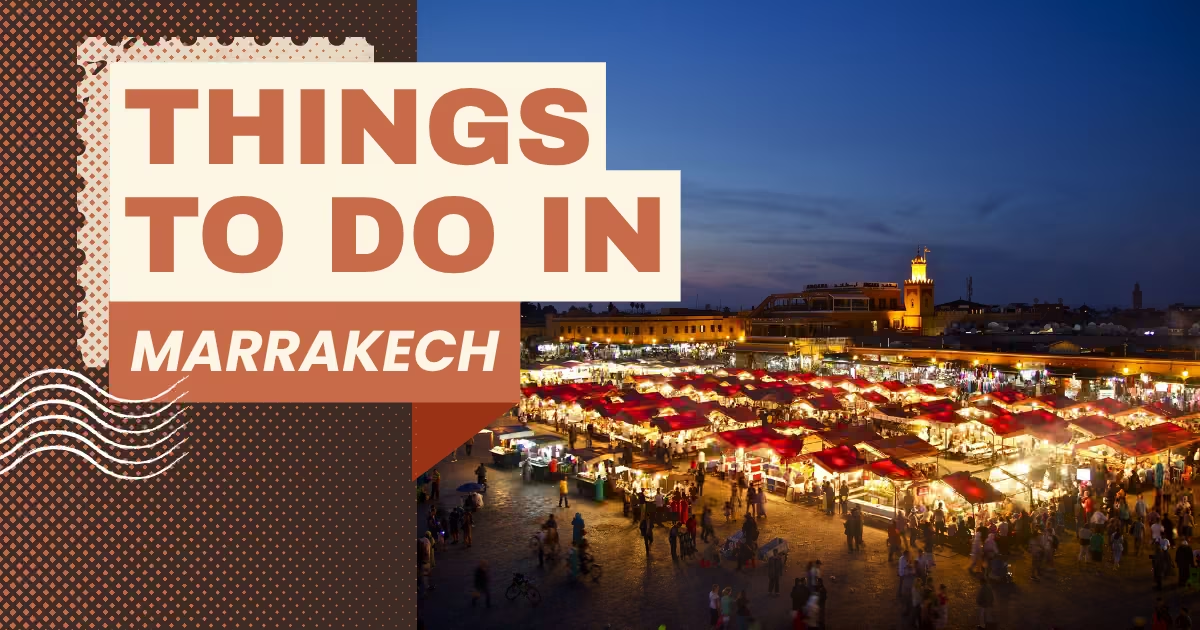
Jemaa el Fna is Marrakech’s central square and the place to begin your visit. In daylight, you will see orange juice stands, small food vendors, market sellers, and people moving between the medina and the newer parts of the city. After sunset, the square becomes busier as food stalls open and local families gather.
Walk around before choosing a food stall. Look for clear menus, visible prices, and steady local traffic. Ask about the price before ordering, especially for drinks and mixed plates. The square is easy to visit independently, but a licensed evening food tour can help you understand what you are eating and avoid paying for items you did not request.
2. Explore the souks of the medina
The souks spread through narrow lanes north of Jemaa el Fna. You will find leather goods, woven baskets, lanterns, rugs, ceramics, spices, babouche slippers, and clothing. Each section has its own character, although the lanes can be confusing on your first visit.
Download an offline map before you enter. Turn off your phone’s visible navigation if you prefer a quieter experience, and ask a shopkeeper for directions if you lose your way. Some people may offer to guide you and then ask for payment, so be clear about whether you want help.
Bargaining is expected in many shops. Start with a price you can accept, keep the conversation polite, and walk away if the item costs more than you want to pay. Do not feel pressured to purchase anything simply because you entered a shop.
3. Visit Ben Youssef Madrasa
Ben Youssef Madrasa is one of the most impressive historic buildings in Marrakech. The former Islamic college is known for its carved cedar, patterned tilework, stucco details, and central courtyard. Look closely at the walls and doorways. Small details reward a slower visit.
Arrive near opening time or later in the afternoon for a calmer experience. Modest clothing is respectful at historic religious sites, and comfortable shoes help when you are walking on uneven medina streets. Check the current opening hours before visiting because schedules can change.
4. See the Bahia Palace
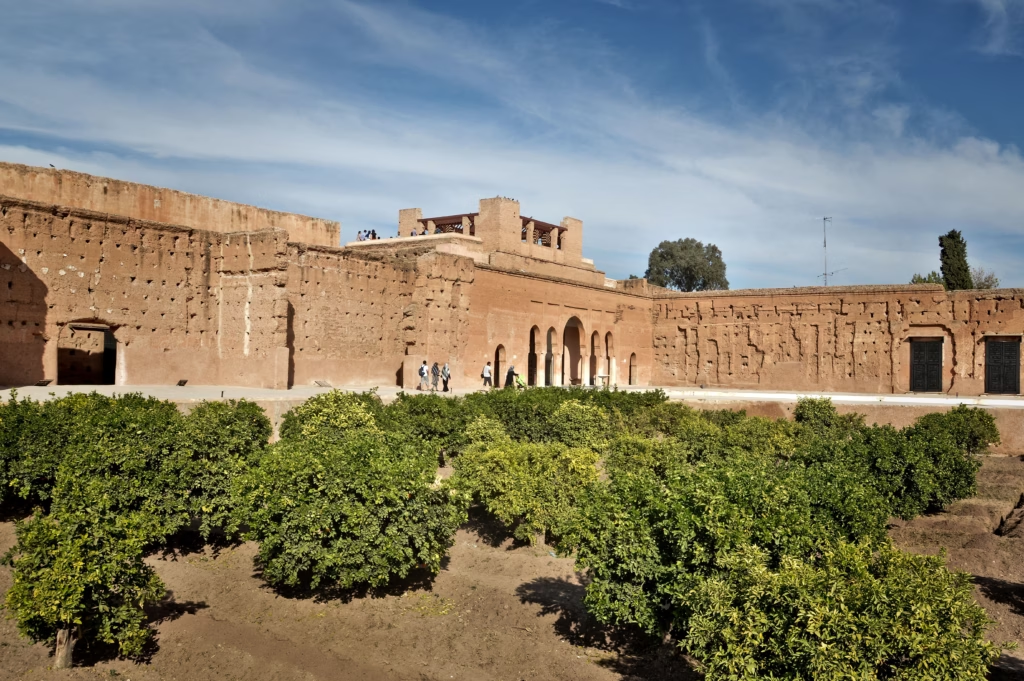
Bahia Palace offers a look at the architecture and private courtyards of nineteenth century Marrakech. Its rooms feature painted ceilings, colorful tiles, carved plaster, and garden spaces filled with citrus trees. The complex is large enough to occupy about an hour if you take time with the details.
Go early if you want clearer views of the main rooms. The palace sits in the southern medina, close to other attractions in the Mellah, so it fits well into a walking route that includes the Saadian Tombs and Dar el Bacha area.
5. Visit the Saadian Tombs
The Saadian Tombs date mainly to the sixteenth and seventeenth centuries and contain ornate burial chambers linked to the Saadian dynasty. The main mausoleum is especially detailed, with carved marble, tilework, and decorative plaster.
The site is compact, so visits are often short. Pair it with Bahia Palace and the nearby Mellah rather than making a separate trip across the city.
6. Admire the Koutoubia Mosque
The Koutoubia Mosque is Marrakech’s best known landmark. Its minaret rises beside Jemaa el Fna and helps you orient yourself when walking through the city. Non Muslim visitors cannot enter the mosque, but you can see its exterior, surrounding gardens, and illuminated tower in the evening.
Visit the nearby park when you need a break from the medina. The open space gives you a quieter view of the mosque and works well for photographs before sunset.
7. Spend an afternoon at Jardin Majorelle
Jardin Majorelle is a carefully designed garden filled with palms, bamboo, desert plants, water features, and intensely colored walls. The garden was created by French painter Jacques Majorelle and later restored by Yves Saint Laurent and Pierre Bergé.
Tickets often sell out during busy periods, so reserve in advance through the official booking system when possible. Plan extra time if you also want to visit the adjacent Pierre Bergé Museum of Berber Arts and the Yves Saint Laurent Museum.
The garden is in the Ville Nouvelle, so take a taxi or plan a longer walk from the medina. It is usually easier to visit in the morning before the heat and larger crowds arrive.
8. Tour the Yves Saint Laurent Museum
The Yves Saint Laurent Museum presents selected clothing, accessories, drawings, and rotating displays connected to the designer’s work. The building itself has a clean, modern design that contrasts with the garden next door.
Fashion enthusiasts can spend well over an hour here. If your schedule is limited, buy a combined ticket for the garden and museum and visit both on the same day.
9. Walk through the Mellah
The Mellah was Marrakech’s historic Jewish quarter. Its streets, balconies, synagogues, and markets offer a quieter view of the old city. Visit the Lazama Synagogue if it is open, then walk toward the Jewish Cemetery and Place des Ferblantiers.
This area also has metalworkers’ shops and a less hectic pace than the central souks. Dress modestly and ask before taking close photographs of people, homes, or places of worship.
10. Visit the Maison de la Photographie
Maison de la Photographie displays historic photographs, maps, and documents connected to Morocco. The collection gives context to Marrakech, mountain communities, clothing, architecture, and daily life during earlier periods.
The rooftop is a popular stopping point because it offers views over the medina and distant Atlas Mountains on clear days. Visit in the late afternoon, then continue toward Jemaa el Fna for dinner.
11. Take a Moroccan cooking class
A cooking class is one of the most practical ways to learn about Moroccan food. Many classes begin in a market, where you select produce, herbs, spices, and bread ingredients before preparing the meal.
Common dishes include tagine, couscous, zaalouk, salads, and pastilla. Ask whether the class can accommodate vegetarian, vegan, gluten free, or allergy related needs. Small group classes usually allow more time for questions and hands on preparation.
You can book a Marrakech cooking class before your trip, then confirm the meeting point and return transport with the provider.
12. Try a traditional hammam
A hammam visit typically includes time in a warm steam room, black soap, exfoliation with a rough mitt, rinsing, and sometimes a massage. The experience can feel intense if you are not used to firm exfoliation, so tell the attendant if you want lighter pressure.
Neighborhood hammams are inexpensive, but they may be separated by gender and require you to bring personal supplies. Tourist focused spas provide more privacy and often include towels, robes, and staff who speak English. Reserve ahead at a well reviewed spa if you want a private treatment.
13. Eat your way through Marrakech
Marrakech has plenty of familiar tourist restaurants, but local specialties deserve your attention. Look for slow cooked tagines, harira soup, msemen flatbread, grilled meats, fresh salads, olives, dates, and mint tea. For dessert, try chebakia or a pastry filled with nuts and honey.
At food stalls, choose busy vendors with clean work areas and food cooked in front of you. Carry hand sanitizer and drink bottled or filtered water if you are sensitive to changes in water quality.
For a quieter meal, book a table at a riad restaurant or a rooftop dining room. Confirm whether the restaurant serves alcohol if that matters to your plans, since many Moroccan restaurants do not.
14. Shop for useful souvenirs
Good souvenirs include woven baskets, small ceramics, leather slippers, argan oil from a trusted seller, spices, tea glasses, and handwoven textiles. Ask where an item was made and whether the material is genuine before paying a premium.
If you buy a rug, request a written receipt that lists its size, material, price, and shipping arrangement. Pack fragile ceramics carefully, or ask the shop to wrap them for checked luggage.
15. Relax at Le Jardin Secret
Le Jardin Secret sits inside the medina and offers a peaceful break near the souks. Its gardens use traditional irrigation ideas and include planted courtyards, shaded paths, and a tower with views over the surrounding rooftops.
The site is smaller than Jardin Majorelle and often easier to fit into a medina walking day. Stop here during the hottest part of the afternoon, then return to the souks when the temperature drops.
16. Take a day trip to the Atlas Mountains
The Atlas Mountains are a popular day trip from Marrakech. Many tours travel toward the Ourika Valley, Imlil, or nearby Berber villages. The experience varies significantly by route, so read the itinerary carefully before booking.
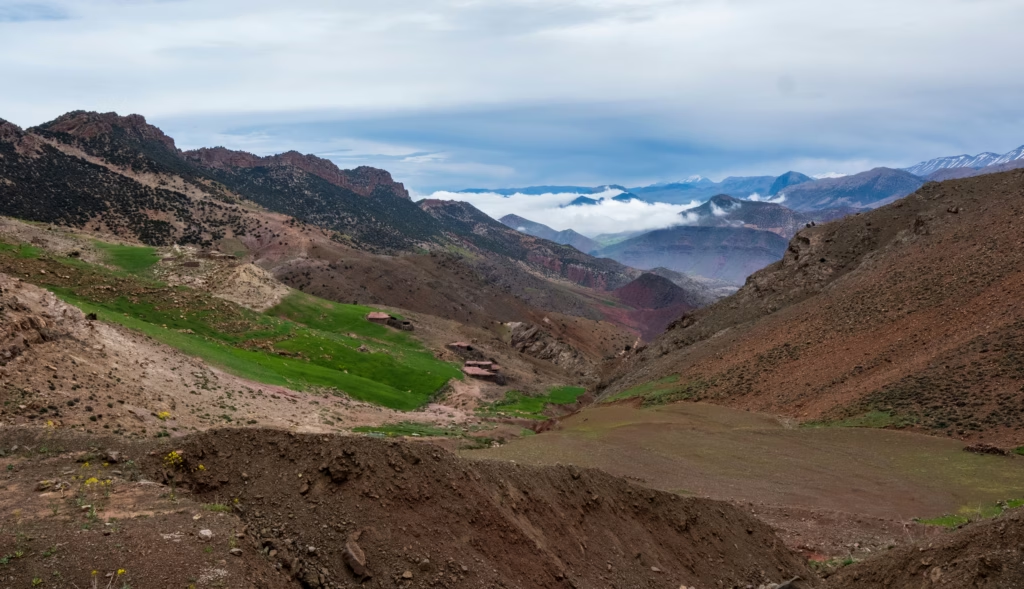
Some trips include a short hike, a village visit, lunch beside a river, or a stop at a women’s argan cooperative. Ask how much time you will spend in the vehicle and whether the walk suits your fitness level. Mountain weather can be cooler than Marrakech, so bring a light layer and sturdy shoes.
A small group Atlas Mountains day trip is convenient if you do not want to arrange transport. Private tours offer more control over stops and walking time.
17. Visit the Agafay Desert
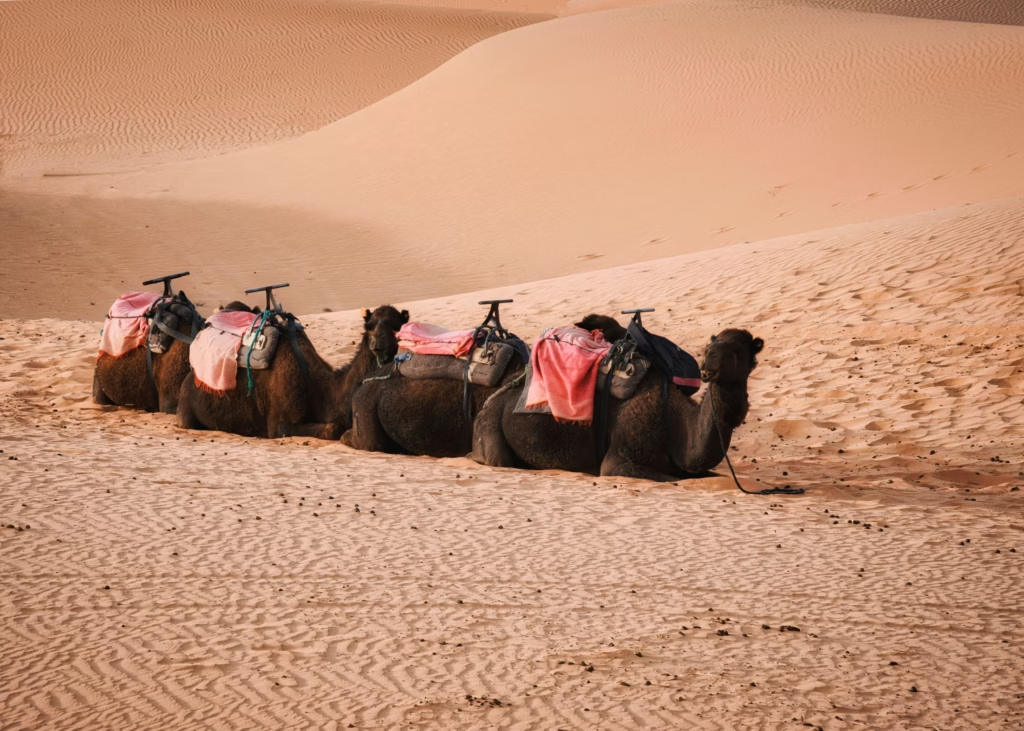
Agafay is a rocky desert area roughly outside Marrakech, and it is easier to reach than the Sahara for a short trip. Visitors often go for a sunset meal, camel ride, quad biking, or an overnight camp.
Agafay is not a sand dune destination, so check photographs and the activity description before booking. Sunset temperatures can fall quickly. Bring sunscreen, closed shoes, and a light jacket even during warm months.
18. See the Palmeraie
The Palmeraie is a palm grove area on the outskirts of Marrakech. Some travelers visit for a short camel ride, while others choose a quad biking excursion or a meal at a resort. Ask the operator about animal welfare, helmet use, insurance, and the length of the activity before you pay.
The area has a mixed reputation because some tours spend more time taking guests to shops than promised. Read recent reviews and confirm the exact pickup and return arrangements.
19. Explore Gueliz and Hivernage
Gueliz gives you a modern side of Marrakech, with art galleries, cafes, boutiques, bakeries, and restaurants. The streets are wider and easier to navigate than the medina. Hivernage has upscale hotels, lounges, and restaurants, along with several pleasant gardens.
These neighborhoods are useful when you want a break from historic sights. They also offer more familiar dining options if you need a simple meal after several days of Moroccan food.
20. Take a trip to Ait Ben Haddou or Ouarzazate
Ait Ben Haddou is a fortified village made from earthen buildings and is often included in longer excursions through the High Atlas. Ouarzazate is farther away and works better as an overnight trip than a rushed day tour from Marrakech.
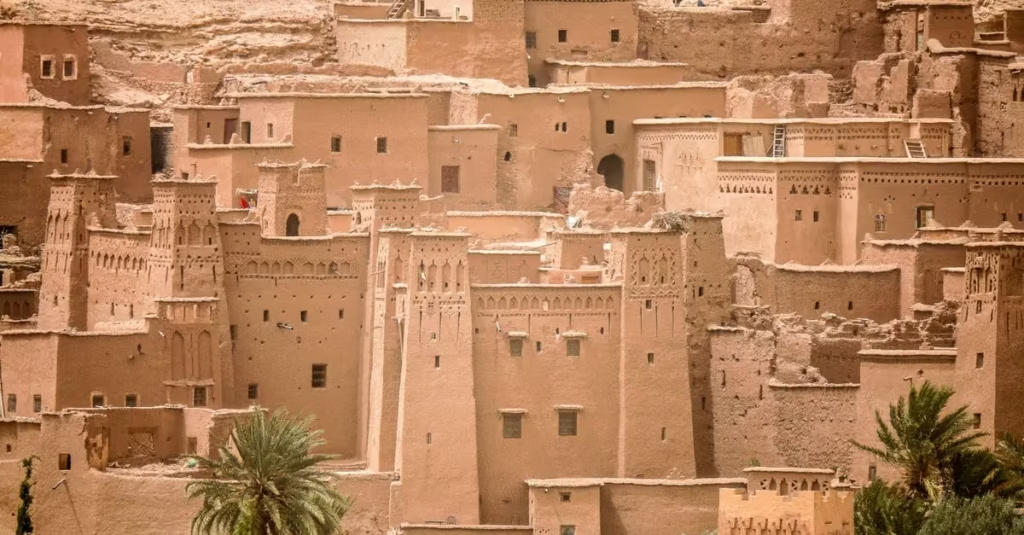
The road crosses mountain passes and can take many hours. If you want to visit this area, consider adding a night or two to your route rather than returning to Marrakech late the same day. This 10 day Morocco itinerary includes a more comfortable way to plan regional travel.
21. Watch the city at sunset
Sunset changes the feel of Marrakech. Rooftop terraces near Jemaa el Fna offer views over the medina, minarets, and distant mountains on clear evenings. Reserve a table if you want a good seat, and choose a restaurant that lists its prices clearly.
After sunset, stay aware in crowded lanes and keep your phone and wallet secure. If you are walking back to a riad in a quiet area, ask the property for the safest route or arrange a taxi.
A practical three day Marrakech itinerary
Day 1: The central medina
Start at Jemaa el Fna, then walk through the souks to Ben Youssef Madrasa and Maison de la Photographie. Stop for lunch in the medina and rest during the hottest part of the day. Return to the square for dinner and sunset views.
Day 2: Palaces, gardens, and a hammam
Visit Bahia Palace, the Mellah, and the Saadian Tombs in the morning. Have lunch near the southern medina, then book a hammam or relax at Le Jardin Secret. Finish with dinner at a riad restaurant.
Day 3: Choose your pace
Take an Atlas Mountains or Agafay excursion, or stay in the city for Jardin Majorelle, the Yves Saint Laurent Museum, Gueliz, and Hivernage. Book a cooking class in the evening if you prefer a city based activity.
Tips for things to do in Marrakech, Morocco
- Carry small Moroccan dirham notes for snacks, taxis, tips, and small purchases.
- Wear comfortable shoes because medina lanes can be uneven and crowded.
- Dress with shoulders and knees covered when visiting religious or traditional areas.
- Ask before photographing people, shopkeepers, performers, and private homes.
- Keep valuables in a zipped bag, especially in busy markets and squares.
- Do not follow unsolicited guides into the medina unless you agree on a price first.
- Confirm taxi fares before departure, or ask the driver to use the meter.
- Use a hotel arranged transfer if you arrive late at night with luggage.
- Carry a scarf, sunscreen, and water during warm weather sightseeing.
- Check official attraction websites for current hours, ticket rules, and closures.
Is Marrakech good for a first trip to Morocco?
Yes, especially if you want a city with many historic sights, food experiences, gardens, and easy access to day trips. The medina can feel busy and confusing at first, but staying near a known gate and saving your riad’s location offline makes arrival easier.
Marrakech is also a useful starting point for a longer Morocco route that includes the coast, the Atlas Mountains, the desert, or Fes. Give yourself time to adjust to the pace of the medina rather than trying to visit every attraction in a single day.
Marrakech gives you plenty of ways to build a trip around your own interests. You can focus on architecture and history, spend hours tasting local dishes, or pair the city with mountains and desert scenery. With a sensible schedule, these things to do in Marrakech Morocco fit comfortably into three or four days and leave you with time to enjoy the city between major stops.






One Comment